Kazakhstan is investing $10 billion to expand its railway network, aiming to build a new overland corridor between China and Europe.
From Alashankou, China-Europe freight trains roar across the grasslands. What was once a quiet border transshipment station in Kazakhstan is now filled with cranes operating day and night.
Since 2022, a large number of traders have shifted away from routes passing through Russia and instead turned to the Trans-Caspian International Transport Route—the so-called “Middle Corridor.” This route runs through Kazakhstan, Azerbaijan, Georgia, and Turkey before connecting to Europe, spanning more than 4,250 kilometers in total, with the longest section lying within Kazakhstan.
Data from a British investment firm shows that freight volume on this corridor has increased nearly tenfold compared with 2022. Talgat Aldybergenov, Chairman of Kazakhstan Temir Zholy (Kazakhstan Railways), stated that after disruptions in maritime shipping through the Strait of Hormuz, cargo volumes from China via Kazakhstan to Europe have increased significantly. Rail transport offers controllable transit times and high reliability, and Chinese customers are showing growing interest in rail logistics.
In the first quarter of 2026, China-Kazakhstan trade reached $13.2 billion, up 46.6% year-on-year. Growing bidirectional cargo flows are forcing rapid expansion of infrastructure capacity. Kazakhstan has designated transport and logistics as a national strategic pillar.
Kazakhstan Railways announced that total infrastructure investment is expected to reach $10 billion by 2030, with half of the funding already secured. This year, the country plans to build and upgrade 900 kilometers of railway. The most important project is the approximately 300-kilometer Ayagoz–Bakhty railway, which will become the third rail border crossing between China and Kazakhstan after completion.
Once finished, the rail freight capacity between China and Kazakhstan is expected to increase from the current 55 million tons to 100 million tons. To address traction capacity constraints, Kazakhstan Railways has signed contracts to purchase 300 locomotives from the United States and 270 locomotives from China over the next decade, while maintaining long-term cooperation with manufacturers in the U.S. and France.
In the first quarter of this year, 173 trains operated along the Middle Corridor, each carrying 55 containers. The annual target is 600 trains, with a planned increase of another 67% next year. In 2025, container freight transiting Kazakhstan between China and Iran increased nearly fourfold to 4,600 TEUs, and is expected to continue rising this year.
Overcoming Bottlenecks in the Caspian Sea
The Middle Corridor requires ferry transport across the Caspian Sea—goods are shipped from Kazakhstan’s Aktau and Kuryk ports to Baku in Azerbaijan. A shortage of vessels has long constrained efficiency.
Kazakhstan Railways is investing more than $100 million to order six cargo ships: four built by Chinese shipyards and two by Azerbaijani shipbuilders, with deliveries expected to begin next year.
Land-based hubs are also expanding. The Kazakhstan Xi’an terminal, launched in 2023 in the Xi’an International Port Area, has handled more than 250,000 tons of cargo as of November 2025. In Europe, Kazakhstan is negotiating the acquisition of container terminals in Romania, Hungary, and Germany, and plans to purchase its first cargo aircraft by the end of the year to build an integrated air-rail-sea multimodal transport system.
Multilateral Financing Support
In addition to domestic funding, Kazakhstan Railways secured over $2.5 billion in financing in the first half of 2026 from institutions including the World Bank, the Asian Infrastructure Investment Bank (AIIB), the European Bank for Reconstruction and Development (EBRD), and the IFC. These funds will be used for projects such as the Almaty railway bypass, the Moyynty–Kyzylzhar new line, and the renovation of 124 stations.
The official goal is to reduce transit time along the Middle Corridor within Kazakhstan from 84 hours to 55 hours, while increasing transit capacity by 60%.
With deeper cooperation between China and Kazakhstan in port digitalization and train scheduling coordination, the “Belt and Road” steel artery is evolving from a backup option into a key stabilizer of the Eurasian supply chain.
-
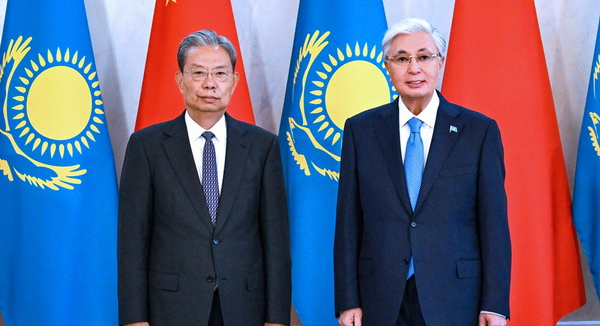
Zhao Leji pays an official goodwill visit to Kazakhstan.374
-
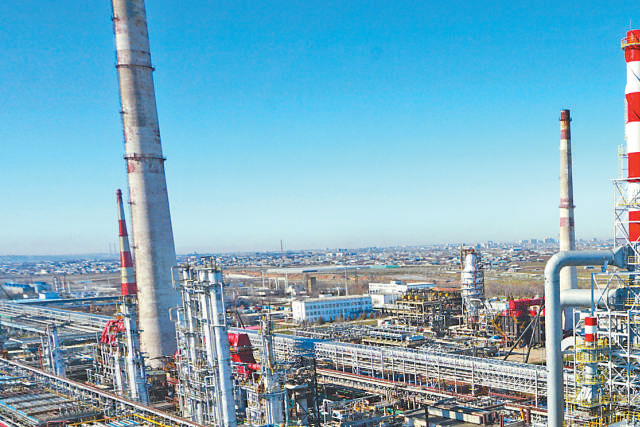
Oil and Gas Cooperation Serves as the Cornerstone of Practical China-Kazakhstan Cooperation360
-
Kazakhstan and China to launch joint grain trading platform345
-
Kazakhstan is investing $10 billion to expand its railway network, aiming to build a new overland corridor between China and Europe.356
-
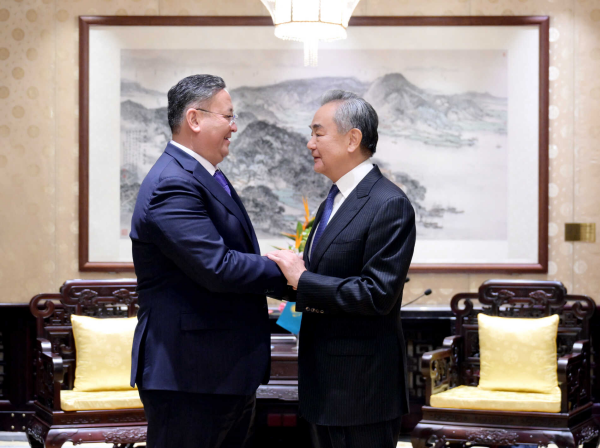
Chinese Foreign Minister Wang Yi Meets with Nurtleu, Assistant to the President of Kazakhstan.345